Water intruding into Minneapolis basements falls into three categories that dictate the entire job. Category 1 clean water from a burst pipe can often be extracted and dried in place, but Category 2 gray water from sump pump discharge or Category 3 black water from combined storm and sanitary sewers in older Minneapolis and Saint Paul neighborhoods requires full containment, PPE, and disposal of porous materials. Spring snowmelt running off still-frozen ground produces the highest volume of Category 3 events in March and April, while ice dams push meltwater behind brick and into wall cavities where damage stays hidden until interior surfaces are opened.
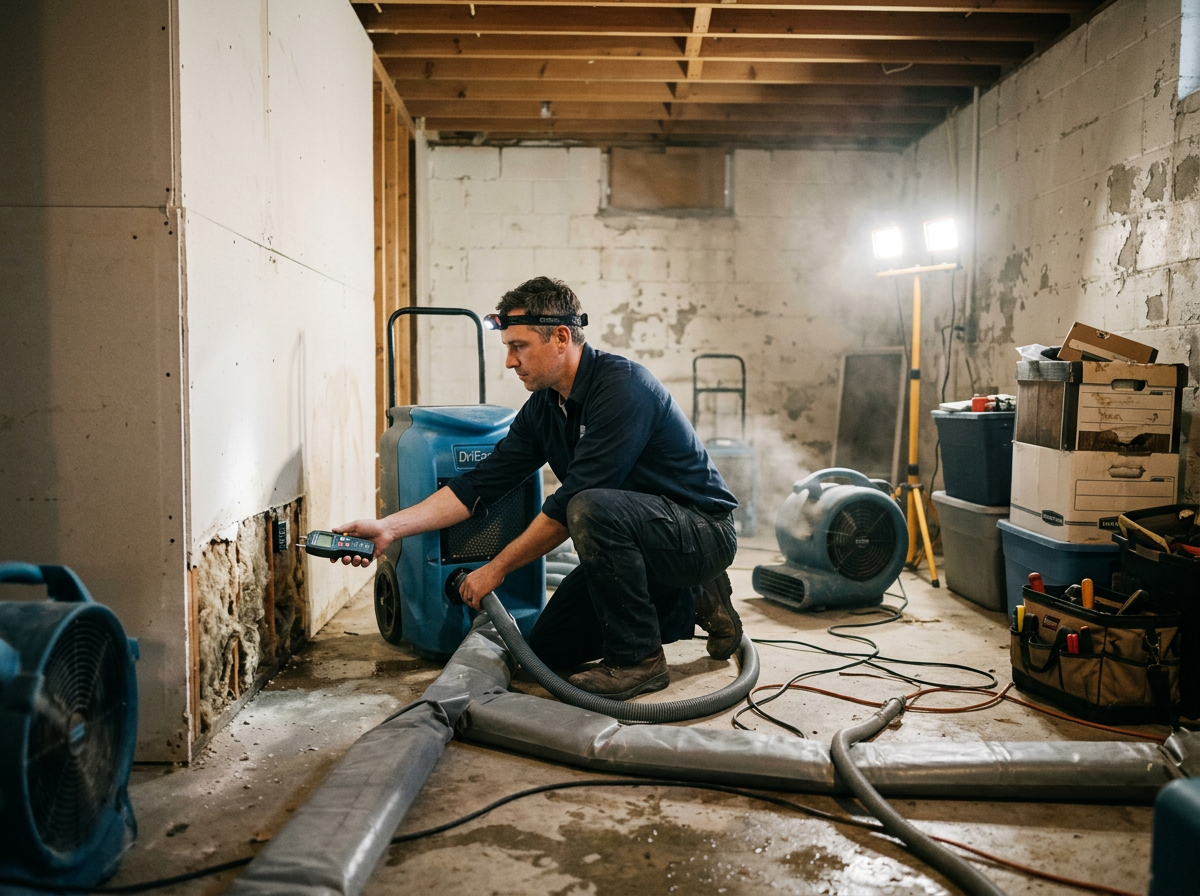
Extraction begins with submersible pumps to remove standing water, followed by truck-mounted and portable extraction wands that pull water from carpet pad, hardwood gaps, and the top inch of concrete. Once bulk water is gone, technicians place moisture meters on every wall and floor to establish baseline readings, then set up air movers and dehumidifiers sized for the cubic footage. Drying targets are 12-16 percent moisture content in wood and under 1 percent difference between affected and unaffected drywall; these levels are logged daily because heavy clay soils around Twin Cities foundations keep moisture against the wall long after interior air feels dry.
Salvage decisions hinge on material and exposure time. Hardwood floors can often be saved if dried within 48 hours, but saturated carpet pad, fiberglass batt insulation, and drywall below the water line must be cut out to prevent hidden mould growth. The mould window in Minnesota basements is typically 24-48 hours once temperatures rise above freezing; after that, remediation costs multiply. All work is photographed with timestamps, moisture logs, and material disposal records so insurance adjusters see exactly what was removed and why.
Safety protocols address both the water and the structure. Pre-1940 stone and clay tile foundations in Minneapolis and Saint Paul can shift when saturated, while 1950s-70s concrete block walls leak at mortar joints and hollow cores that fill like chimneys. Technicians wear full-face respirators on any sewage job and isolate HVAC returns immediately. Documentation includes before-and-after photos, daily moisture charts, and a written scope that matches the insurance estimate line by line.
Technician insight
In Minneapolis, the thing that catches most people out with Water Damage Restoration is spring snowmelt running off frozen ground straight into pre-1940 stone foundations; the water enters at the footing and travels up through the stone, so drying only the floor leaves the wall saturated and mould follows within days.
March Snowmelt Into South Minneapolis Stone Basement
Heavy snowmelt hit still-frozen clay soil and entered a 1928 stone foundation. Water rose six inches and carried sediment from the combined sewer line. Extraction and wall cavity drying were completed in four days; daily logs showed moisture returned to unaffected levels before mould could establish.
Water Damage Restoration Services We Offer
✓Category 3 Sewage Backup Extraction
Full containment, removal, and disposal of contaminated water from combined sewer overflows common in older Minneapolis and Saint Paul blocks.
✓Ice Dam Interior Wall Drying
Targeted drying of wall cavities where meltwater has entered behind brick or siding, preventing hidden mould in Minneapolis homes with older rooflines.
✓Sump Pump Discharge Line Failure Response
Clearing frozen or blocked discharge lines that cause working pumps to back up into basements during spring thaw.
✓Pre-1940 Stone Foundation Drying
Moisture extraction and monitoring tailored to stone and clay tile foundations that shift when water saturates mortar in Minneapolis and Saint Paul.
✓Concrete Block Wall Cavity Drying
Drilling and negative-pressure drying of hollow cores in 1950s-1970s block foundations where water travels upward through the wall.
✓Poured Wall Cold Joint Sealing and Drying
Addressing leaks at tie holes and cold joints in newer exurban poured foundations followed by targeted drying and monitoring.
Water Damage Restoration Cost in Minnesota
| Service | Typical Range | What Affects It |
|---|---|---|
| Initial Assessment And Moisture Mapping | Free–$150 | Waived when extraction proceeds same day |
| Category 1 Water Extraction And Drying | $900–$2,800 | Varies with square footage and drying duration |
| Category 3 Sewage Extraction And Disposal | $2,200–$5,500 | Includes PPE, containment, and disposal fees |
| Ice Dam Wall Cavity Drying | $1,400–$3,600 | Depends on number of affected walls and access needed |
| Daily Equipment Rental After Day 3 | $150–$350 per day | Charged only while equipment remains on site |
Ranges are typical for Minnesota and confirmed with an exact written quote before any work starts.
How it works
- 1
On-Site Assessment
Technician arrives within hours, identifies water category, maps moisture with meters, and notes foundation type and any combined sewer involvement.
- 2
Water Extraction
Standing water removed with pumps and wands; contaminated materials isolated and bagged for disposal.
- 3
Drying And Monitoring
Air movers and dehumidifiers placed; daily moisture readings logged until targets are reached.
- 4
Documentation And Handover
Photos, logs, and scope provided for insurance; homeowner receives written drying verification.
Pricing
Costs depend on water category, affected square footage, foundation type, and whether hidden wall or cavity drying is required.