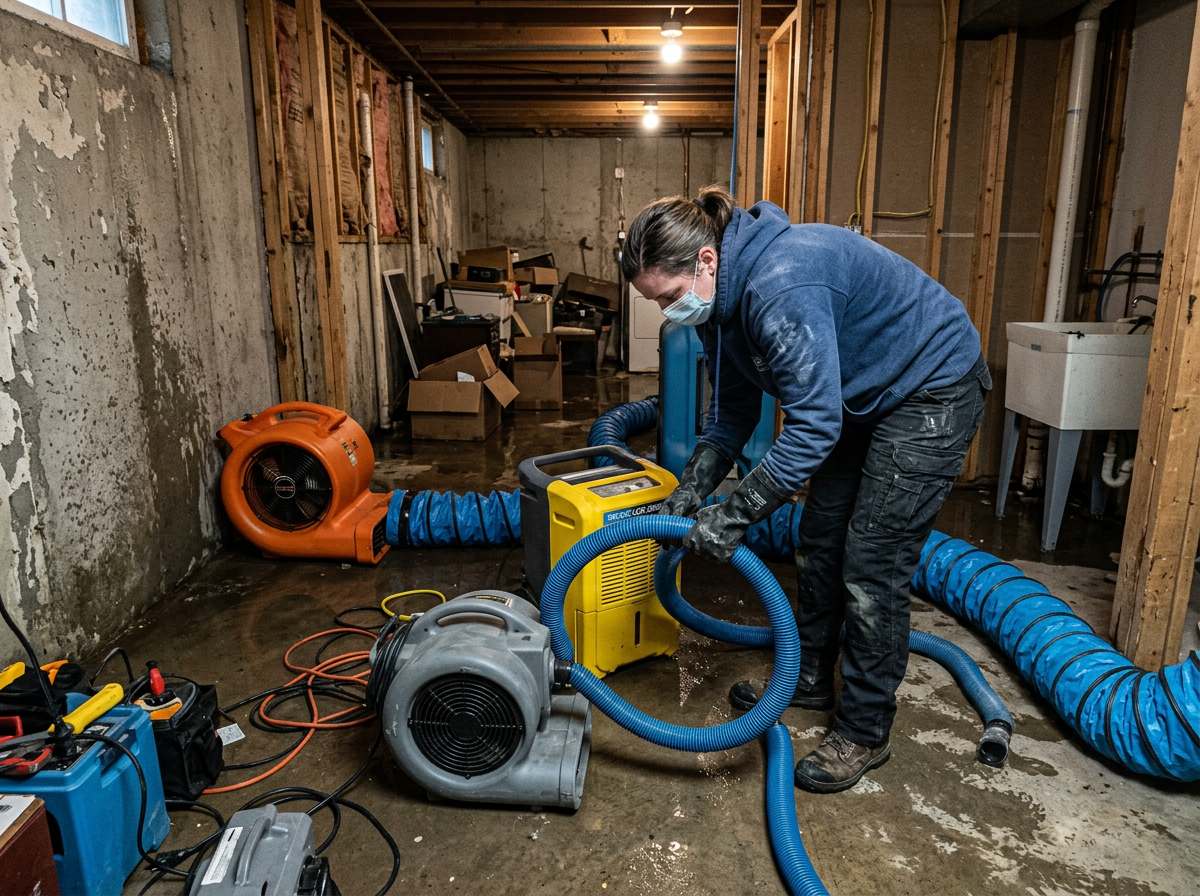
Water entering Minneapolis basements is typically Category 2 or 3. Snowmelt off still-frozen ground or ice-dam intrusion under shingles brings gray water that soaks insulation and wall cavities. Sewage backups from combined storm and sanitary lines in older neighborhoods add black-water hazards requiring full containment and PPE. Extraction begins with truck-mounted vacuums to remove standing water within hours, followed by air movers and dehumidifiers staged to pull moisture from clay soils pressing against foundations.
Moisture meters and infrared cameras map hidden water behind pre-1940 stone walls or in the hollow cores of 1950s-70s concrete block. Salvageable items include sealed hardwood and metal shelving; carpet pad, drywall below the water line and fiberglass batts must be cut out to prevent mold within 24-48 hours. Drying targets are 12-16% moisture content in wood framing and under 60% relative humidity before any reconstruction begins.
Safety protocols address electrical hazards from submerged outlets, possible methane from sewage and structural weakening of older footings set below the 42-60 inch frost line. Every job includes photo documentation of affected materials, water category classification and daily moisture logs that insurers require for claim approval. Homeowners receive a written scope before work starts so they know exactly what will be removed and what will be dried in place.
March and April remain peak months because meltwater runs directly to foundations while sump-pump discharge lines are still frozen. Technicians check both the interior pump and the exterior line termination to prevent repeat backups. All work follows IICRC S500 standards adapted to local soil and foundation conditions.
Technician insight
In Minneapolis the thing that catches most people out with Basement Flood Cleanup is frozen sump discharge lines. A working pump keeps cycling yet water still rises because the line is solid ice; we always trace the line outside before we leave or the same water returns the next thaw.
March Snowmelt In South Minneapolis
Heavy melt off frozen ground entered a 1928 stone foundation through mortar joints. We found six inches of Category 2 water and saturated clay-tile walls. Extraction and targeted wall removal dried the space in four days; the homeowner submitted our daily logs and avoided a denied claim.
Basement Flood Cleanup Services We Offer
✓Spring Snowmelt Extraction
Removes standing water from rapid March and April runoff that reaches foundations before the ground thaws.
✓Ice Dam Water Intrusion Cleanup
Extracts meltwater that has traveled under shingles into wall cavities, often appearing only as stains on interior finishes.
✓Combined Sewer Backup Remediation
Handles sewage mixed with stormwater entering older Minneapolis and Saint Paul basements through combined sewer lines.
✓Sump Pump Failure Drying
Restores basements after discharge lines freeze solid, forcing water back into the foundation through the pump.
✓Category 3 Containment and Disposal
Sets up negative air and removes contaminated materials from black-water events in pre-1970s stone and block foundations.
Basement Flood Cleanup Cost in Minnesota
| Service | Typical Range | What Affects It |
|---|---|---|
| Category 2 water extraction and drying | $800–$2,200 | Depends on square footage and drying duration |
| Category 3 sewage cleanup | $1,500–$4,000 | Includes containment, disposal and extra PPE |
| Ice-dam wall cavity drying | $600–$1,800 | Varies by number of affected walls and access |
| Sump pump line freeze response | $500–$1,200 | Includes exterior line clearing when accessible |
Ranges are typical for Minnesota and confirmed with an exact written quote before any work starts.
How it works
- 1
Arrival And Safety Assessment
Technician evaluates electrical risks, water category and structural concerns before any extraction begins.
- 2
Standing Water Removal
Truck-mounted equipment extracts bulk water while protecting unaffected areas with containment barriers.
- 3
Hidden Moisture Mapping
Meters and cameras locate water in walls, under slabs and in insulation so nothing is missed.
- 4
Drying And Monitoring
Air movers and dehumidifiers run until readings reach target levels, with daily logs provided to the homeowner.
- 5
Documentation For Claim
Photos, moisture data and scope of work are compiled for submission to insurance.
Pricing
Cost varies with water category, square footage affected and whether walls or flooring must be removed.