Water entering Minneapolis basements falls into three categories that dictate drying approach. Clean water from snowmelt requires straightforward extraction and drying. Gray water from appliance leaks needs antimicrobial steps. Black water from combined sewer backups in older neighborhoods demands full containment, PPE protocols and disposal of porous materials. Each category changes how long crews can safely work and what finishes must be removed immediately.
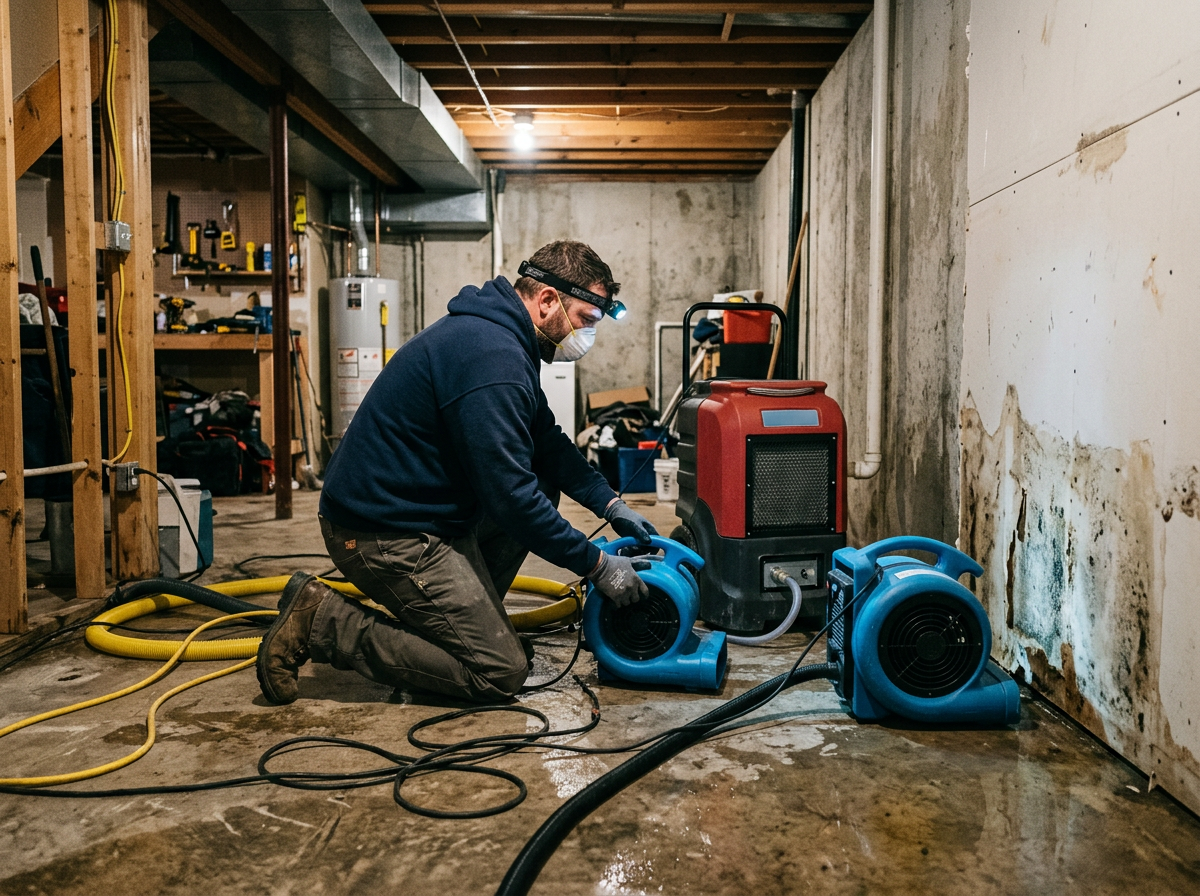
Extraction begins with submersible pumps and wet vacuums to pull standing water, followed by wand extraction on carpets and pads. Once bulk water is gone, crews place air movers and dehumidifiers sized to the square footage and saturation depth. In homes with poured walls or concrete block, drying focuses on cavities behind baseboards and at cold joints where water travels upward through capillary action in clay soils.
Technicians use pin and pinless meters plus thermal imaging to track moisture content down to manufacturer drying targets, typically below 12 percent for wood and 1 percent above ambient for concrete. Salvageable items include hardwood flooring when caught early and drywall above the water line; saturated insulation, carpet pad and particleboard subfloors are cut out. The mold window in spring conditions is often 48 to 72 hours before growth begins behind walls.
Safety steps include GFCI protection on all equipment and ventilation when Category 3 water is present. Documentation for insurance includes daily moisture logs, photos of affected assemblies, and equipment runtime records showing when materials reached target levels. These records help adjusters separate storm-related damage from pre-existing seepage common in pre-1970 Minneapolis foundations.
Technician insight
In Minneapolis, the thing that catches most people out with Structural Drying is how clay soils and frost-depth footings keep feeding moisture back into stone and block foundations long after pumps stop, especially during March snowmelt when ground is still frozen.
South Minneapolis Stone Foundation After Spring Snowmelt
Meltwater ran along still-frozen ground and entered through mortar joints in a 1920s stone basement. Visible water was pumped out the first day, but meters showed saturation in the lower three feet of walls and under the slab. Crews removed baseboards, injected air into cavities, and ran dehumidifiers for four days until readings stabilized. Homeowner avoided mold growth and received complete drying logs for the claim.
Structural Drying Services We Offer
✓Moisture Mapping and Documentation
Pin and thermal scans locate hidden saturation in walls and slabs so drying focuses only on affected areas.
✓Industrial Dehumidifier Deployment
High-capacity units sized for Minnesota basements pull moisture from air while preventing secondary condensation on cold surfaces.
✓Air Mover and Evaporation Setup
Directed airflow across wet materials speeds evaporation without pushing moisture into unaffected cavities.
✓Wall Cavity and Insulation Drying
Baseboard removal and air injection dry hollow cores in concrete block and stone foundations common in Minneapolis and Saint Paul.
✓Concrete Slab Drying Protocols
Mat systems and perimeter fans address moisture trapped under slabs where heavy clay soils slow natural drying.
✓Post-Drying Verification Testing
Final meter readings and documentation confirm materials meet target moisture levels before reconstruction begins.
Structural Drying Cost in Minnesota
| Service | Typical Range | What Affects It |
|---|---|---|
| Initial Extraction And Equipment Setup | $900–$2,200 | Higher for Category 3 water or multi-room involvement |
| Daily Equipment Rental And Monitoring | $350–$650 | Per day; varies with number of machines needed |
| Wall Cavity Drying Add-On | $400–$900 | Common in pre-1970 Minneapolis and Saint Paul homes |
| Final Verification And Documentation | $250–$450 | Includes moisture logs for claims |
Ranges are typical for Minnesota and confirmed with an exact written quote before any work starts.
How it works
- 1
Assessment And Water Removal
Technicians measure water category, map saturation, and extract standing water with pumps and vacuums.
- 2
Equipment Placement
Air movers, dehumidifiers, and cavity drying tools are positioned based on meter readings and foundation type.
- 3
Daily Monitoring
Moisture levels are checked and equipment adjusted until targets are reached, usually within three to five days.
- 4
Final Verification
All materials are retested and logged before equipment removal and handoff to reconstruction.
Pricing
Costs depend on square footage affected, water category and how many days drying is required.