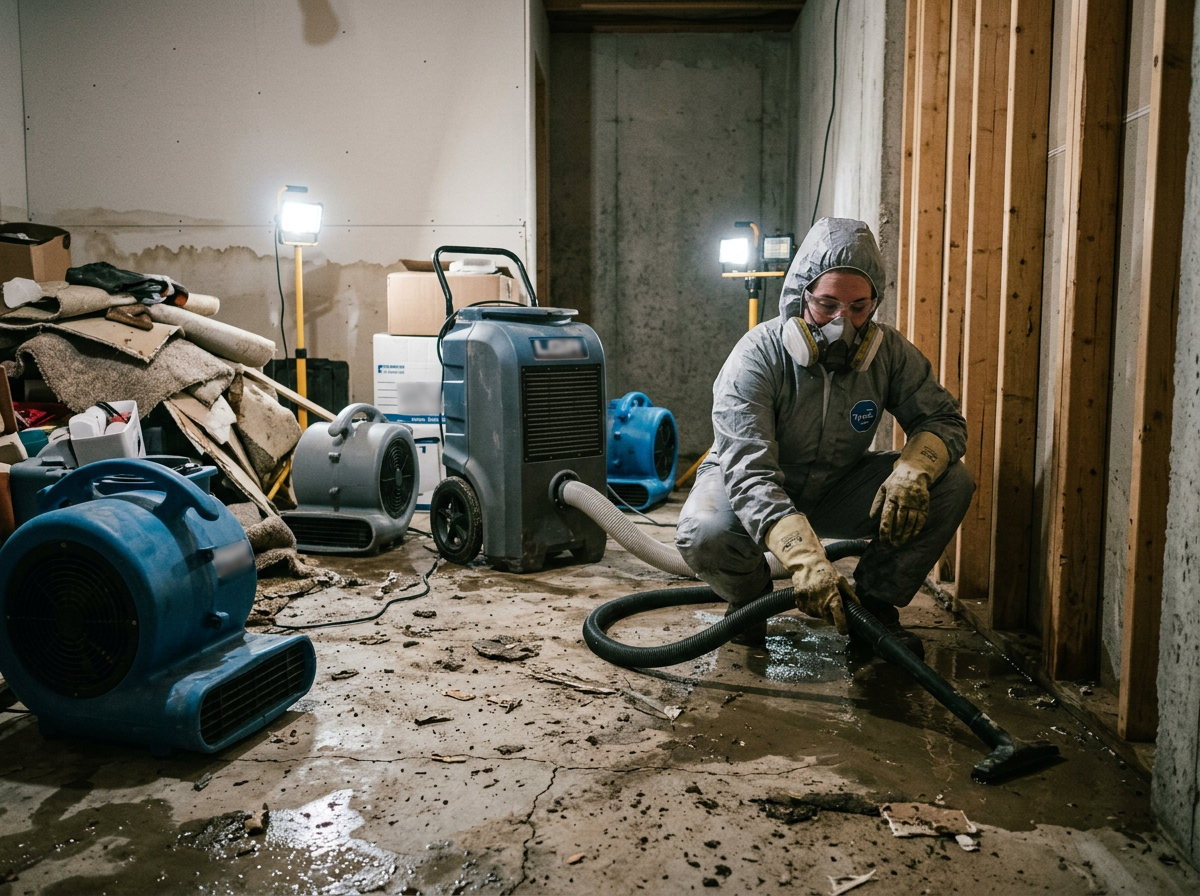
Storm flood water in Minneapolis falls into three categories that dictate every step. Category 1 from clean rain needs straightforward extraction, while Category 2 gray water from sump backups or roof runoff requires PPE and antimicrobial steps. Category 3 black water from combined storm and sanitary sewers in older Minneapolis and Saint Paul neighborhoods demands full containment, disposal, and often gutting of affected materials. Extraction begins with submersible pumps to remove standing water, followed by truck-mounted vacuums to pull water from porous concrete block and stone foundations common in pre-1970 homes. Moisture meters then map hidden saturation in clay soils that hold water against footings set below the 42-60 inch frost line.
Drying targets keep wood moisture content below 15 percent and wall cavities under 60 percent relative humidity using air movers and low-grain dehumidifiers sized for Minnesota spring conditions. Materials like hardwood flooring can sometimes be salvaged if dried within 48 hours, but drywall, insulation, and carpet padding must be cut out once Category 3 water contacts them. The mould window closes fast in March and April when warm meltwater meets cold foundation walls, so containment and rapid drying prevent growth that would otherwise appear inside wall cavities from ice dam leaks. Safety protocols include locking out electrical panels and ventilating methane risks from sewage backups before technicians enter.
Documentation for insurance claims starts with pre-work photos of water lines on poured walls and hollow-core block, daily moisture logs, and a clear chain of disposal for black water. Homeowners in ring suburbs with 1950s concrete block foundations often see leaks at mortar joints after heavy snowmelt, while newer exurbs face cold-joint failures; both require different demolition depths. We record every step so adjusters see the difference between surface water and the hidden saturation that travels through heavy clay soils against the foundation.
Final verification uses pin and pinless meters plus thermal imaging to confirm targets before reconstruction. This sequence protects against secondary damage that shows up weeks later when sump discharge lines remain frozen and pumps continue pushing water back indoors.
Technician insight
In Minneapolis, the thing that catches most people out with Storm Flood Cleanup is how spring snowmelt on still-frozen ground bypasses gutters and hits pre-1940 stone foundations or 1960s block walls at the footing line, turning a small leak into widespread Category 3 contamination once it reaches the combined sewers.
South Minneapolis Snowmelt Flood
Heavy March meltwater ran off frozen clay soil and entered a 1928 stone foundation through mortar gaps. We found standing Category 3 water mixed with sewer backup in the finished basement. Extraction and selective demolition of saturated walls were completed within 36 hours, followed by targeted drying that kept mould from forming in the cavities.
Storm Flood Cleanup Services We Offer
✓Emergency Water Extraction
Rapid removal of standing storm water using pumps and vacuums sized for Minneapolis basements before it saturates footings or reaches finished areas.
✓Category 3 Black Water Cleanup
Full containment and disposal of sewage-mixed floodwater from combined sewers, including removal of contaminated drywall and flooring in older Minneapolis neighborhoods.
✓Ice Dam Meltwater Remediation
Extraction and drying of water that enters wall cavities through ice dams, preventing hidden mould growth inside pre-1940 stone and clay tile foundations.
✓Sump Pump Backup Drying
Restoration after frozen discharge lines cause pump failure, including moisture mapping of clay soils holding water against 1950s-70s concrete block walls.
✓Foundation Wall Moisture Mapping
Detailed metering of saturation in poured walls and mortar joints to locate hidden water from spring snowmelt running off frozen ground.
✓Content Drying and Salvage
Controlled drying of salvageable items and documentation of losses for claims when storm water affects basements in Saint Paul and Minneapolis.
Storm Flood Cleanup Cost in Minnesota
| Service | Typical Range | What Affects It |
|---|---|---|
| Initial Extraction Visit | $600–$1,800 | Higher for Category 3 sewage or multi-room involvement in older Minneapolis homes |
| Full Drying Package | $1,200–$3,500 | Includes equipment runtime and daily monitoring through spring snowmelt season |
| Demolition And Disposal | $800–$2,200 | Varies by linear feet of wall removed from concrete block or stone foundations |
| Moisture Mapping Add-On | $250–$450 | Thermal imaging and meter readings for hidden water in cavities |
Ranges are typical for Minnesota and confirmed with an exact written quote before any work starts.
How it works
- 1
Safety And Category Assessment
Technicians evaluate water category, electrical risks, and structural access while containing the area to prevent cross-contamination in combined sewer zones.
- 2
Standing Water Removal
Submersible pumps and extraction equipment clear visible water before it migrates through heavy clay soils or reaches hollow cores in older block foundations.
- 3
Demolition And Disposal
Affected drywall, insulation, and flooring are removed and disposed of according to Category 3 protocols, with photo documentation for claims.
- 4
Drying And Verification
Air movers and dehumidifiers run until meters confirm targets, followed by thermal imaging to verify no residual moisture remains in wall cavities.
- 5
Final Documentation
Complete logs of moisture readings, disposal records, and drying times are provided for insurance submission.
Pricing
Costs depend on water category, volume, affected square footage, and whether demolition or disposal of contaminated materials is required.