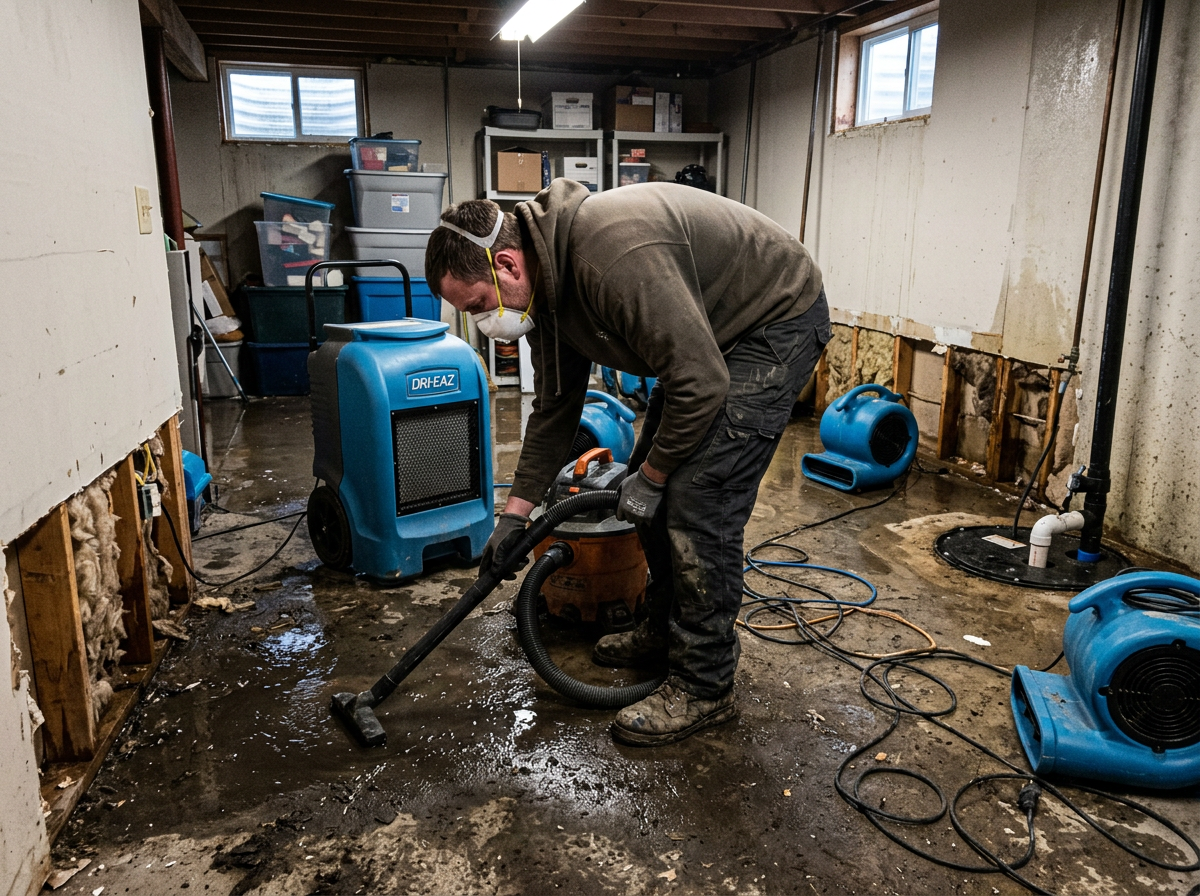
Sump pump failures in Minneapolis often involve Category 1 water from rain or snowmelt that quickly becomes Category 2 or 3 once it mixes with basement soils or enters combined storm and sanitary sewers common in older neighborhoods. Extraction begins with submersible pumps and truck-mounted units to remove standing water within hours, followed by removal of saturated baseboard and carpet to prevent hidden moisture pockets. Technicians use moisture meters and infrared cameras to locate water behind walls or under slabs before setting drying targets below 12 percent moisture content in wood and 1 percent in concrete.
After extraction, affected materials are evaluated for salvage: plywood subfloors and drywall above the water line can often be dried in place if moisture readings stay under saturation thresholds, while particleboard, insulation, and carpet padding are cut out and discarded to avoid hidden mold growth. The mold window in Minnesota basements is narrow during cool spring months, but still requires antimicrobial treatment and dehumidification within 48 hours. Safety steps include shutting off electrical circuits near water, wearing PPE for potential sewage exposure, and ventilating enclosed spaces before equipment setup.
Documentation for insurance includes dated photos of water levels, equipment placement logs, moisture readings at multiple depths, and a written scope of work that notes foundation type, whether pre-1940 stone, concrete block, or poured walls. This record helps adjusters understand how frost depth and clay soils contributed to the backup and supports claims for hidden damage behind finished surfaces.
Final verification uses pin and pinless meters plus thermal imaging to confirm drying targets before any reconstruction begins, reducing the chance of recurring issues during the next freeze-thaw cycle.
Technician insight
In Minneapolis, the thing that catches most people out with Sump Pump Failure Cleanup is frozen discharge lines that make a working pump push water straight back into the basement during March and April snowmelt, especially on pre-1970 concrete block foundations where water travels through hollow cores and appears far from the sump pit.
South Minneapolis Spring Backup
Heavy overnight snowmelt ran across still-frozen ground into a 1960s block foundation; the sump pump discharge had frozen solid and water rose six inches across the finished basement. Extraction and wall drying were completed over four days with daily meter checks, and only the lower two feet of drywall plus carpet needed replacement.
Sump Pump Failure Cleanup Services We Offer
✓Emergency Water Extraction After Pump Failure
Removes standing water from basements when sump pumps stop due to frozen lines or power loss before secondary damage spreads.
✓Frozen Discharge Line Assessment
Inspects and clears ice-blocked sump pump lines that cause water to recirculate into Minneapolis foundations during spring thaw.
✓Moisture Mapping and Structural Drying
Uses meters and dehumidifiers to locate and remove hidden moisture in walls and slabs common with clay soils and deep frost lines.
✓Contaminated Water Removal
Handles Category 2 or 3 water from combined sewer backups that frequently accompany heavy snowmelt events in older Minneapolis neighborhoods.
✓Salvageable Material Evaluation
Determines which drywall, flooring, and insulation can be dried versus cut out after sump pump water intrusion.
✓Post-Failure Mold Prevention
Applies targeted treatments and drying protocols within the critical window to stop mold growth in cool Minnesota basements.
Sump Pump Failure Cleanup Cost in Minnesota
| Service | Typical Range | What Affects It |
|---|---|---|
| Initial Assessment And Extraction | $250–$650 | Higher when Category 3 water or large volumes require additional PPE and disposal. |
| Drying Equipment Rental Per Day | $150–$350 | Varies with number of air movers and dehumidifiers needed for the basement size. |
| Material Removal And Disposal | $200–$500 | Increases with finished basements requiring drywall or insulation cut-out. |
| Moisture Mapping And Monitoring | $100–$250 | Daily visits until targets are met; longer jobs in older stone foundations cost more. |
Ranges are typical for Minnesota and confirmed with an exact written quote before any work starts.
How it works
- 1
Initial Assessment And Safety
Technician arrives within hours, confirms power isolation, identifies water category, and maps affected zones using moisture meters.
- 2
Water Extraction
Standing water is removed with submersible pumps and extraction wands, followed by removal of saturated porous materials.
- 3
Drying And Monitoring
Air movers and dehumidifiers are positioned; daily moisture readings track progress toward target levels in wood and concrete.
- 4
Documentation And Handover
Photos, readings, and scope are compiled for the homeowner to submit with any insurance claim before equipment is removed.
Pricing
Costs depend on water volume, affected square footage, and whether hidden damage behind walls or under slabs is present.