2026-09-02 · Dave Olson
Block Versus Poured Foundations: Why Older Twin Cities Basements Leak Differently
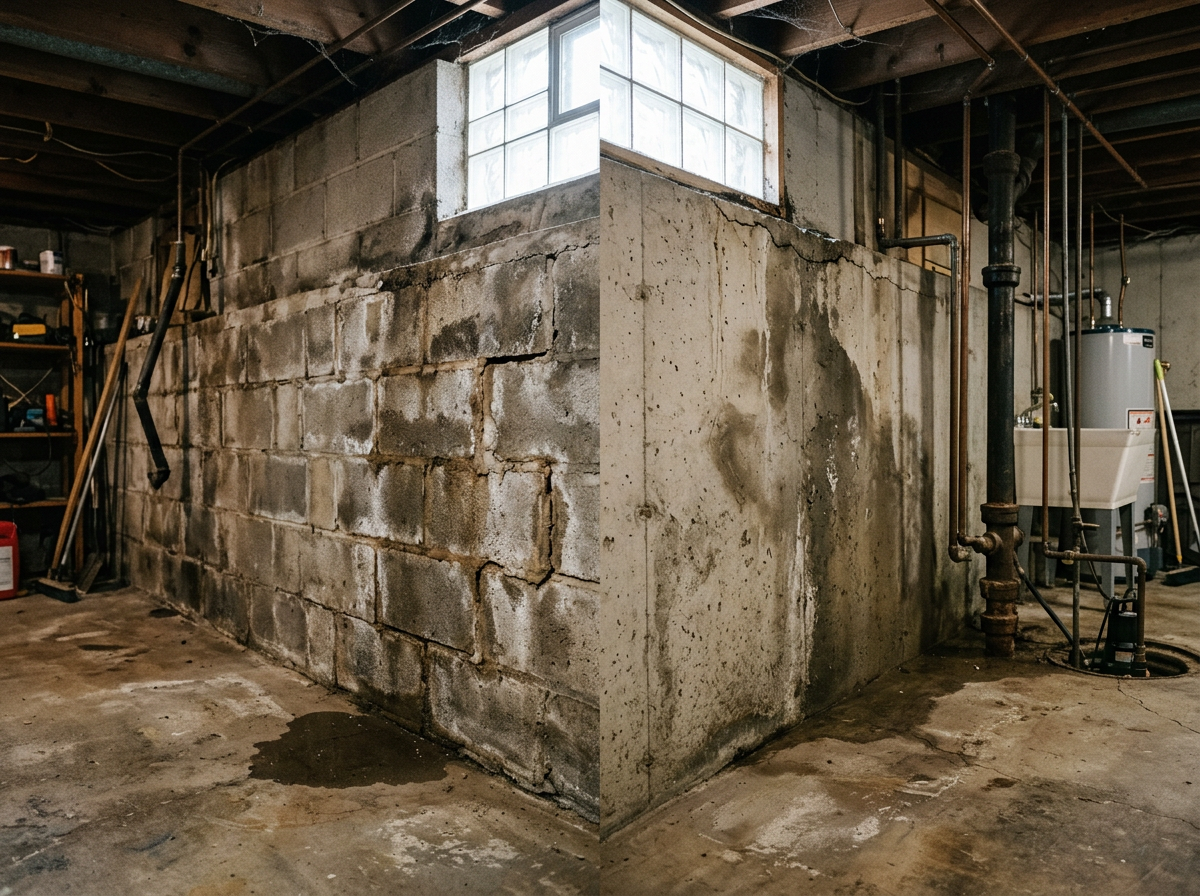
In older Twin Cities homes, block foundations typically leak at the mortar joints when 42-60 inches of frost heave shifts the walls, while poured foundations more often crack horizontally from hydrostatic pressure in heavy clay soils during March and April melt.
Block Foundations and Mortar Joint Leaks
Block walls in pre-1960 Minneapolis and Saint Paul homes consist of individual concrete blocks stacked with mortar. Frost reaching 42-60 inches pushes against the exterior, and the mortar cracks first because it is less flexible than the blocks themselves. Once a joint opens, water follows the path straight into the basement. Combined sewers common in these neighborhoods add pressure when spring runoff overwhelms the lines. Homeowners usually see water along the base of the wall or at specific joints rather than across an entire surface. Drying times after such leaks average 5-8 days when humidity is held below 55 percent with proper airflow. Checking for efflorescence along the joints gives an early sign before water appears inside.
Poured Foundations and Crack Patterns
Poured concrete walls in homes built after the mid-1960s fail differently because the single slab has no mortar lines. Hydrostatic pressure from heavy clay soils builds against the exterior during spring melt when the ground remains frozen below. This pressure creates horizontal cracks at 3-5 feet above the floor or vertical cracks near corners. Ice dams can force additional water into small fissures at the top of the wall, sending moisture down inside the cavity. These cracks often appear after a single heavy melt event rather than gradually. Structural drying after water enters through cracks usually requires 7-10 days at 50-55 percent humidity to prevent mold on any remaining wood framing.
Frost Depth, Spring Melt, and Soil Effects
Minnesota frost depth of 42-60 inches keeps the ground frozen while surface snow melts in March and April. The melt water runs across the surface instead of soaking in, increasing pressure against both foundation types. Heavy clay soils around the Twin Cities hold this water against the wall longer than sandy soils would. Sump discharge lines that freeze at the outlet can back up and add interior water. Block foundations show leaks first at joints because the shifting soil separates the mortar. Poured walls resist initial movement but develop cracks once pressure exceeds the concrete strength. Monitoring sump discharge lines before temperatures drop helps reduce one source of added volume.
Ice Dams, Insurance Distinctions, and Next Steps
Ice dams form on roofs and push water under shingles and into wall cavities, a problem that affects both foundation types once water reaches the sill plate. Minnesota insurance policies separate sudden loss from groundwater seepage, so documenting whether water entered through a crack or joint matters for claims. Homeowners can reduce risk by clearing gutters before winter and ensuring downspouts extend at least 5 feet from the foundation. After any water appears, extraction and drying should begin within 24-48 hours. For details on how ice dams move water inside walls, see the related article on ice dams. Information on sump pump discharge line freezing is available in the post covering Minnesota winter discharge issues. Water damage restoration steps for these specific leaks are outlined on the water damage restoration page.