2026-09-02 · Dave Olson
Sump Pump Discharge Lines Freeze in Minnesota Winters: What Actually Happens
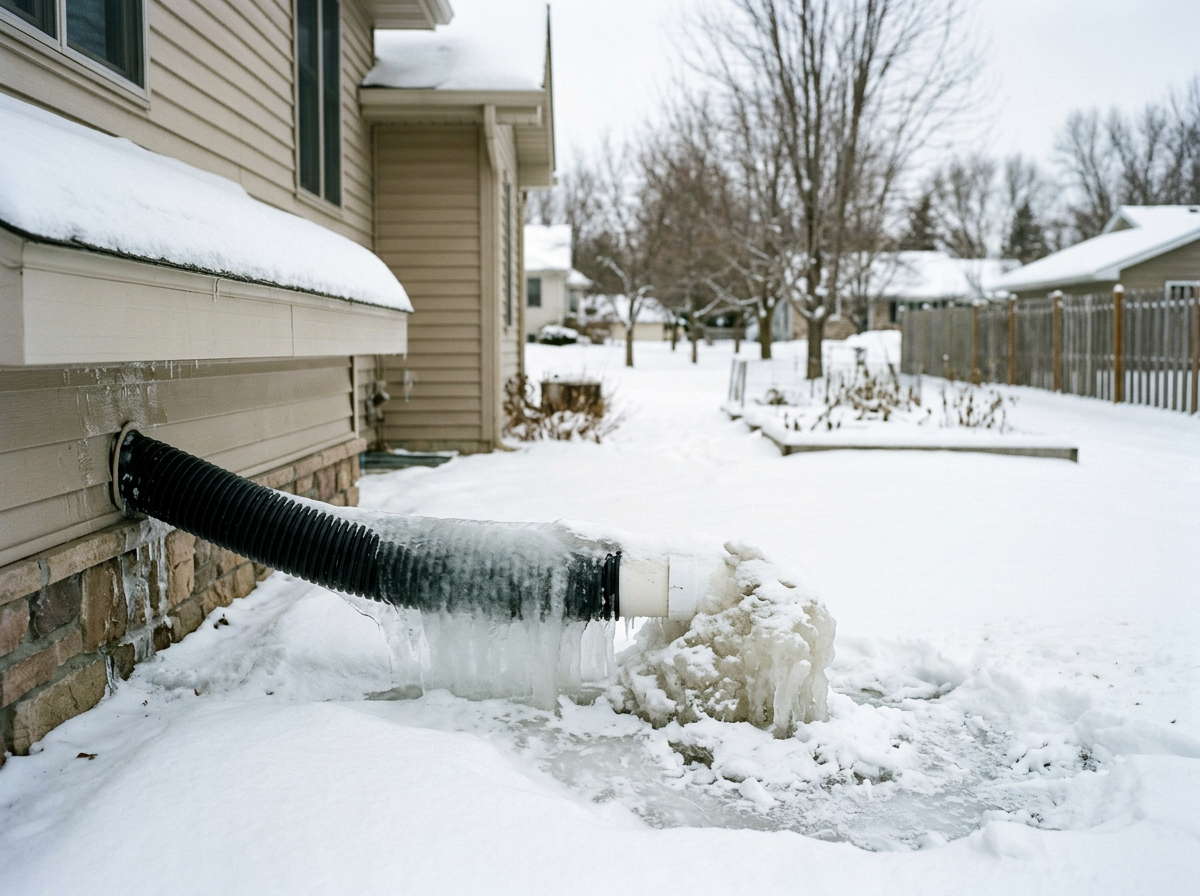
Sump pump discharge lines freeze in Minnesota winters once overnight lows drop below 20°F for several consecutive nights and frost depth reaches 42-60 inches, blocking flow and forcing water back through the sump basin or into wall cavities. This happens most often in March and April when daytime melt runs over still-frozen ground and at night the pipe refreezes. The result is a slow, steady rise in basement water rather than a sudden flood.
How Ice Forms Inside the Pipe
Discharge lines typically run from the sump basin to the street or yard, often exiting above grade or through a buried section that sits within the frost zone. When temperatures fall, water left in the line after the last pump cycle begins to freeze from the outside walls inward. Clay soils common in the Twin Cities hold moisture against the pipe, speeding the process. Once a solid plug forms, even a working pump cannot push water past the blockage. The line stays frozen until daytime highs rise enough to thaw the ice from the outside or until the homeowner applies external heat. This cycle repeats through late winter and early spring whenever meltwater meets overnight cold.
What Happens When the Line Backs Up
Water continues entering the sump basin from foundation drains while the discharge remains blocked. The pump runs but recirculates water inside the pit or forces it upward until it finds another exit. In homes with combined sewers, the pressure can push water through floor drains or older clay tiles. Heavy clay soils slow natural drainage, so the water stays longer and saturates the slab edge. Drying times after such an event often run 5-10 days with dehumidifiers running at 40-50% relative humidity. The water is usually clear groundwater rather than sewage, which matters for insurance claims that separate seepage from sudden loss.
Differences Between Block and Poured Foundations
Older Minneapolis and Saint Paul homes with block foundations tend to leak first at mortar joints once water pressure builds from a frozen discharge. Poured foundations resist initial entry better but can develop hairline cracks that widen under repeated freeze-thaw cycles. Both types see water travel upward into wall cavities when ice dams on the roof send melt behind siding and sheathing. Checking the discharge line first rules out the simpler mechanical cause before assuming a foundation or roof issue. Block Versus Poured Foundations: Why Older Twin Cities Basements Leak Differently explains the visible crack patterns that appear after repeated backups.
Connection to Ice Dams and Wall Leaks
A frozen discharge line often coincides with ice dam problems because both are driven by the same extended cold periods. Meltwater from the roof can enter wall cavities at the same time basement water rises, creating wet insulation on multiple levels. Homeowners notice damp spots on above-grade walls that do not match typical seepage patterns. Ice Dams and Water Inside Your Walls: What Minnesota Homeowners Should Check outlines the inspection sequence that separates roof entry from sump issues. Addressing the discharge line first prevents misdiagnosis that leads to unnecessary roof work.
Verifying and Clearing the Line
Start by confirming the pump is running and the pit is filling. Trace the discharge pipe outside and look for ice at the exit point or along any visible run. If the line exits near the foundation, carefully apply heat with a hair dryer or heat tape rated for outdoor use while monitoring indoor water levels. Avoid driving heavy equipment or salt directly over buried sections, as this can crack older PVC or cast-iron pipe. Once flow resumes, watch the sump for 24 hours to confirm the line stays clear. Persistent problems after thawing point to a partial collapse or improper pitch that will require excavation.
The practical takeaway is to locate your discharge exit before the first hard freeze, keep it clear of snow and debris, and test the line with a bucket of water after any multi-day cold snap so you know whether the pipe is open before spring melt begins.